Santa Monica- -APPY and ODME-The On-Demand Mobile Economy
The California Years · Stage 02 · The Call
The Power of NewThe Uber of Everything
Santa Monica stopped asking, “What screenplay are you working on?” and started asking, “What app are you building?” The beach had become a laboratory for the on-demand city.
Signal · 3rd Street Promenade
The city was becoming an interface.
The old economy treated time, labor, cars and parking spaces as separate things. The on-demand economy put a screen between them and began matching idle capacity to immediate intent.
The ODME Equation
People With Money + No Time+ People With Time + No Money
= The On-Demand Mobile Economy The 2014 insight from the 3rd Street Promenade: the app was not the product. The app was the matchmaker between unused capacity and impatient demand.
Ordinary World · Landfall
Nice to be back with my piers.
After years of movement at sea, Santa Monica offered the opposite temptation: a harbor beautiful enough to make staying still feel like progress.
The People’s Republic
A waiting room with an ocean view.
Santa Monica had slackers, dreamers, screenwriters, start-up philosophers and members of the intelligentsia who could describe possibility beautifully. The danger was not lack of imagination. It was becoming so fluent in possibility that movement felt unnecessary.
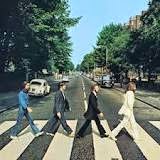
Threshold Image
Abbey Road
The crossing is the point. At some stage, every idea has to leave the curb and enter traffic.
Intelligence can name the tide. Action is what unties the boat.
The Call · Silicon Beach
The screenplay became an app.
By late 2014, a different kind of ambition was circulating through Santa Monica: not simply telling stories about the future, but putting the future in someone’s hand.

Field Evidence · 3rd Street
The ODME in public.
Money without time met time without money. The smartphone supplied the handshake.
At Tech in Motion and Cross Campus, the Los Angeles question changed. “What are you doing?” no longer automatically meant a screenplay. It increasingly meant an app, a service, a platform, a new way to compress friction.
On-demand massage, delivery, transport, parking: the category could change, but the operating principle remained the same. Find a moment of inconvenience. Put software in the middle. Make the next action obvious.
Answer the Call · Generation T
Touch became the new command language.
For Generation T — Touch — convenience on the internet reduced to two powerful design forces: speed and cognitive ease.
The Real Remote Control
The smartphone controlled the YOUniverse.
The breakthrough was not that a phone could display information. It was that the phone could collapse intent and fulfillment into the same gesture.
Design Rule 01
Speed
Reduce the distance between wanting something and making it happen.
Design Rule 02
Cognitive Ease
Reduce the number of decisions required before the user can act.
Design Rule 03
Visibility
Make status legible: where it is, when it arrives, what happens next.
Design Rule 04
Trust
The interface has to make a stranger, a car, a service or a handoff feel operationally safe enough to use.
Foreign Land · The Uber of Everything
Every inconvenience looked like a category.
Once the matching mechanism worked for cars, Silicon Beach began seeing the city as a field of removable friction.
Demand
I want it now.
The customer’s unit of value was no longer ownership alone. It was immediacy.
Supply
I have unused capacity.
Idle time, vehicles, skills, storage and services became inventory once software could expose them.
Platform
I can match the two.
The app created a temporary market around a single moment of need.
The Silicon Beach Mechanism
Friction + Idle Capacity + Mobile Coordination = A New Market The “Uber of X” was not really about copying Uber. It was a way of seeing hidden inventory inside ordinary life.Trials · Parking
The curb became a marketplace.
Parking made the on-demand thesis physical. The interface could be elegant, but somebody still had to take the keys, move the car, find the space and return the vehicle at exactly the right moment.

Field Test · Luxe Valet
Out To Launch
The app promised convenience. The field operation had to make the promise true.
The 2014 parking wave exposed the real mechanics of the on-demand economy. Services such as Luxe Valet, Zirx, ValetAnywhere and Vatler competed to remove one of the city’s most irritating tasks: finding a place to leave the car.
SpotHero attacked the problem differently by exposing bookable private lots and garages. That made the deeper issue visible: inventory. Just as ride platforms needed drivers, parking platforms needed access to spaces.
The interface could create demand in seconds. Operations still had to create capacity in the physical world.
The user begins with a destination, not a parking strategy.
The app converts location and timing into a coordinated human exchange.
Behind the screen is the hard problem: physical space and operational capacity.
The experience succeeds only when the physical world obeys the digital promise.
Open The 2014 Parking Field Note
Parking apps were experimenting with everything from trading access to curb space to on-demand valet services. The important shift was not a single winner; it was the recognition that urban inventory could be discovered, reserved and coordinated through software.
The lesson was bigger than parking: the glamorous part was the tap. The competitive advantage lived in what happened after the tap.
The Inmost Cave · Pacific Plaza
The Epiphany Chair.
Sixteen floors above Santa Monica, the city became legible. That was both the gift and the danger.
The View
Perspective is not passage.
From high enough, traffic looks like current, the pier looks like a compass and every future appears navigable. But seeing the route is not the same as taking it.
The Question
What will I make true now that I am here?
Travel had already answered “Where can I go?” The harder question was what insight would become behavior after the suitcase was unpacked.
The view was the revelation. The elevator down was the decision.
Everything looks possible.
A course becomes real because others close.
The idea becomes an email, meeting, page or departure.
The doors open. Philosophy enters the world.
The Elixir · I Got Wired
Make the invisible visible. Then make it unavoidable.
Silicon Beach offered two versions of the same lesson: software had to alter behavior, and insight had to do the same.
The Operating Rule
See Clearly. Choose Narrowly. Move Visibly. A private revelation is potential. A visible next move is evidence.Four Bearings Back To The Pacific
The city became a personal operating system.
Four recurring Santa Monica ideas from the archive connect place, identity, technology and action.
Bearing 01
The People’s Republic of Santa MonicaThe playful republic of dreamers, thinkers and beautiful delay.
Place As CharacterBearing 02
My Pier GroupLandfall, friendship, Hotel California and the Pacific as home horizon.
BelongingBearing 03
The Epiphany ChairThe place where the invisible became visible — and perspective had to become action.
BearingBearing 04
The Power of NewSilicon Beach, the app economy and the moment the city began behaving like software.
Open Original StoryThen / Now
The app was never the final story.
2014
Can this become on-demand?
The excitement was category creation: transport, massage, delivery, parking and nearly anything else that could be summoned through a screen.
The Lasting Question
What friction is actually worth removing?
The stronger design question is not whether a tap can summon something. It is whether the system behind the tap creates enough real value to justify the complexity it hides.
Final Transmission
A harbor is not a hiding place. An interface is not an outcome.
Santa Monica made the future look easy from sixteen floors up. Silicon Beach made the city look easy from a five-inch screen. Both perspectives were useful, and both carried the same warning: do not confuse the view with the voyage. The value begins when the doors open, the handoff works, and the idea survives contact with the street.